Institutional Development • 19 December 2025
The World Café Consultation: A Major Step Forward at St. Lawrence in Recognizing First Peoples
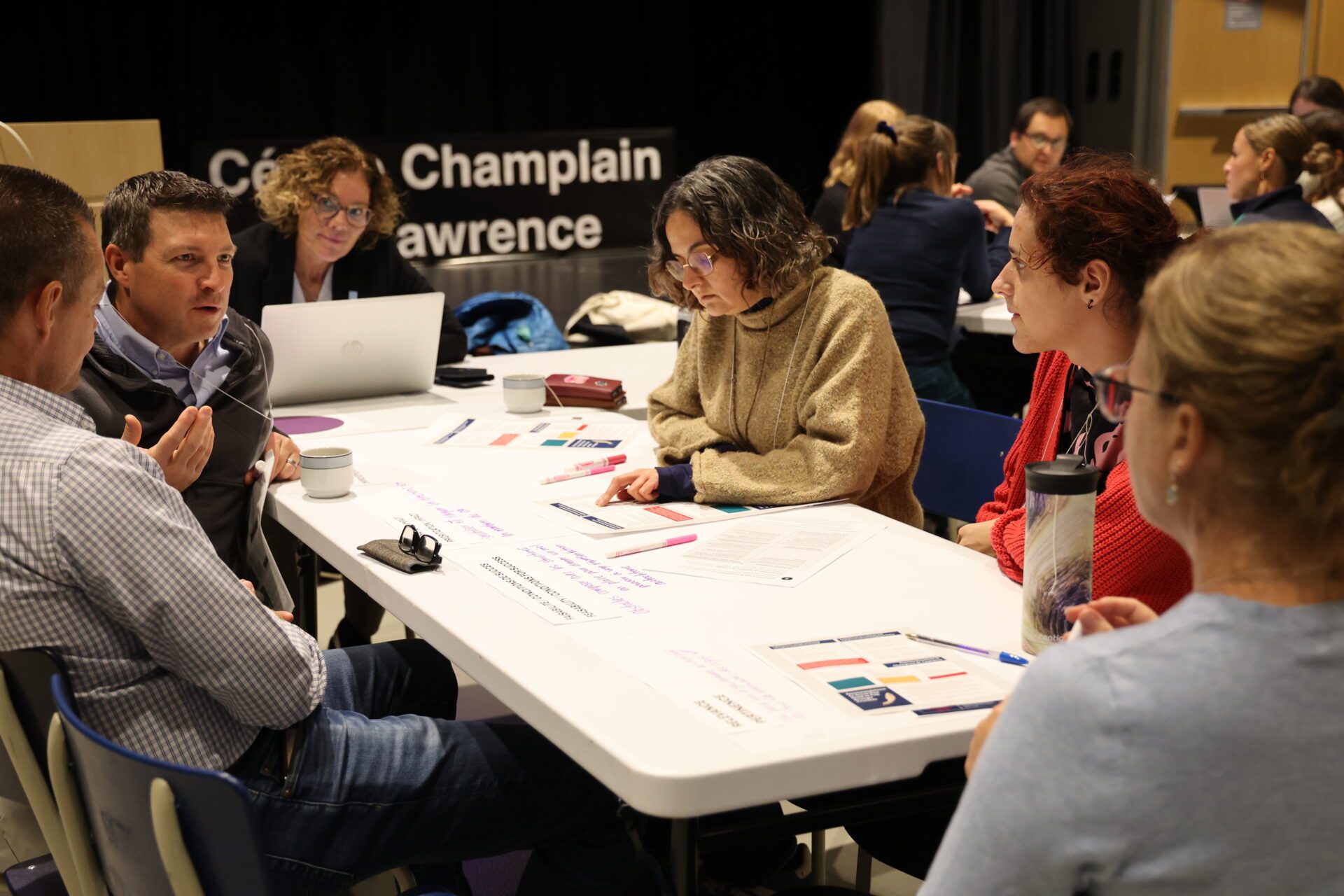
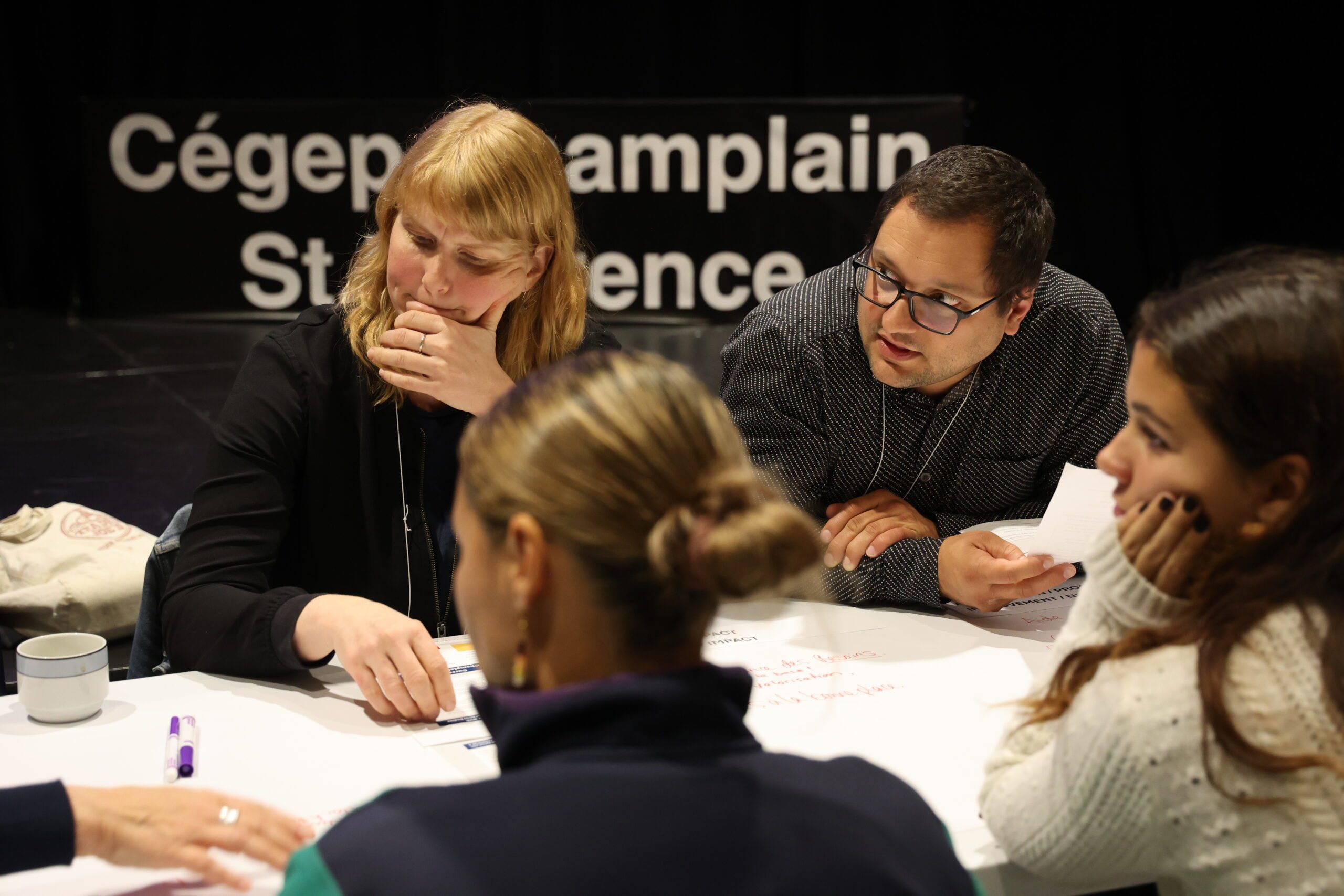
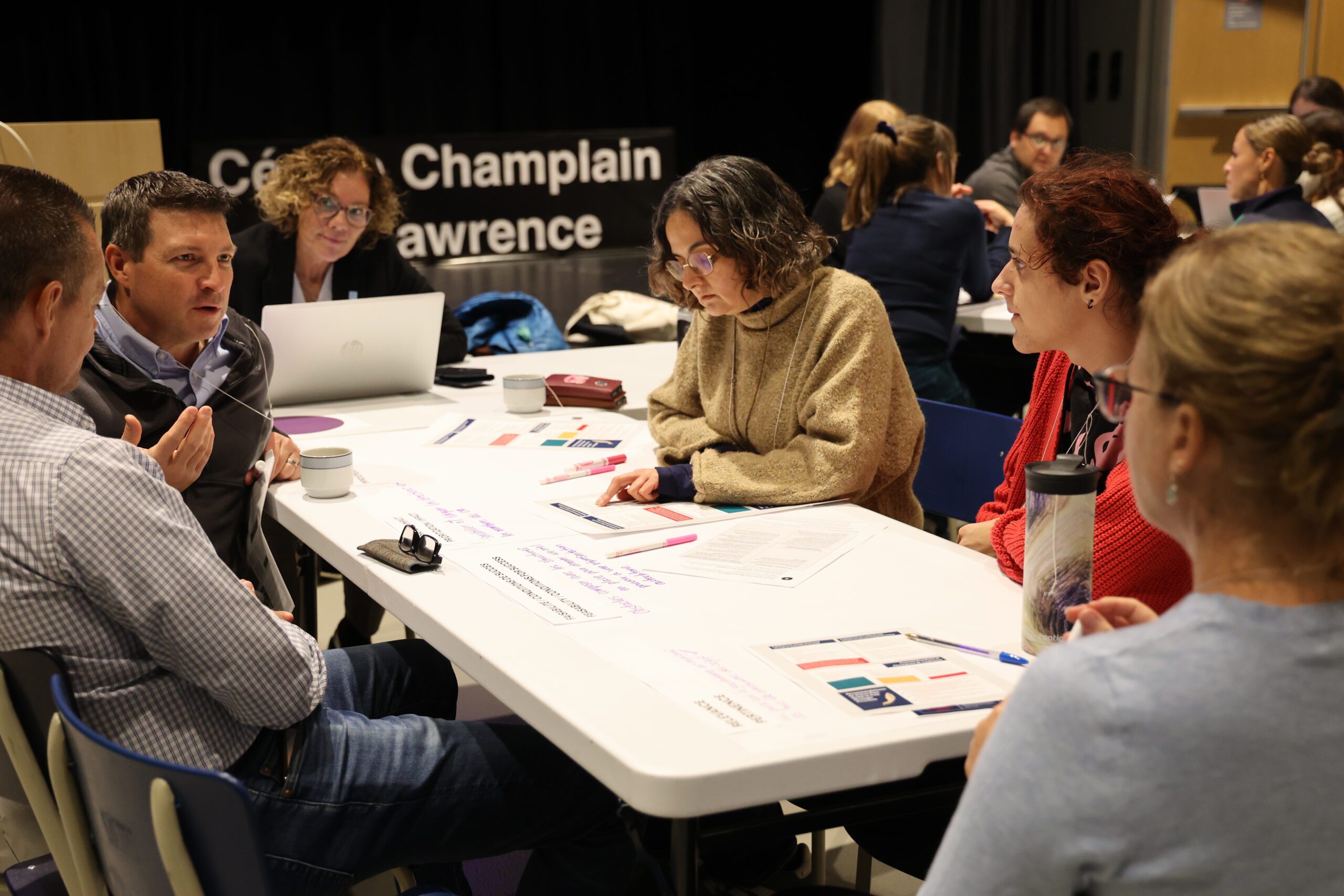
On October 24th, CEGEP Champlain–St. Lawrence held its first-ever World Café consultation dedicated—though not limited—to recognizing and supporting Indigenous students. Staff members from all sectors of the college, including faculty, professionals, and support staff, along with Indigenous students, community partners, and representatives from Indigenous organizations, were invited to participate in an open and collaborative dialogue on how the institution can meaningfully acknowledge First Peoples across all areas of activity.
Tiawenhk to the Wendat Nation, the Centre d’Amitié Autochtone de Québec, MAMUK, the Bureau des Premiers Peuples at Université Laval, Cégep Garneau, Cégep Ste-Foy, and Cégep de Trois-Rivières for their meaningful contributions to the success of this event.
After a convivial lunch, approximately 35 participants gathered in five groups to begin the World Café workshop. For readers unfamiliar with the concept, the World Café is a simple yet highly effective method for facilitating collaborative dialogue. Its purpose is to bring larger groups together to engage in insightful and meaningful conversations on important shared concerns. As described by LearnAlberta, “It involves participants rotating through small tables in a café-like setting to discuss a topic in multiple rounds, with each round building on the insights from the last.” This process fosters collective intelligence, helps identify emerging patterns and challenges, and inspires innovative and actionable ideas.
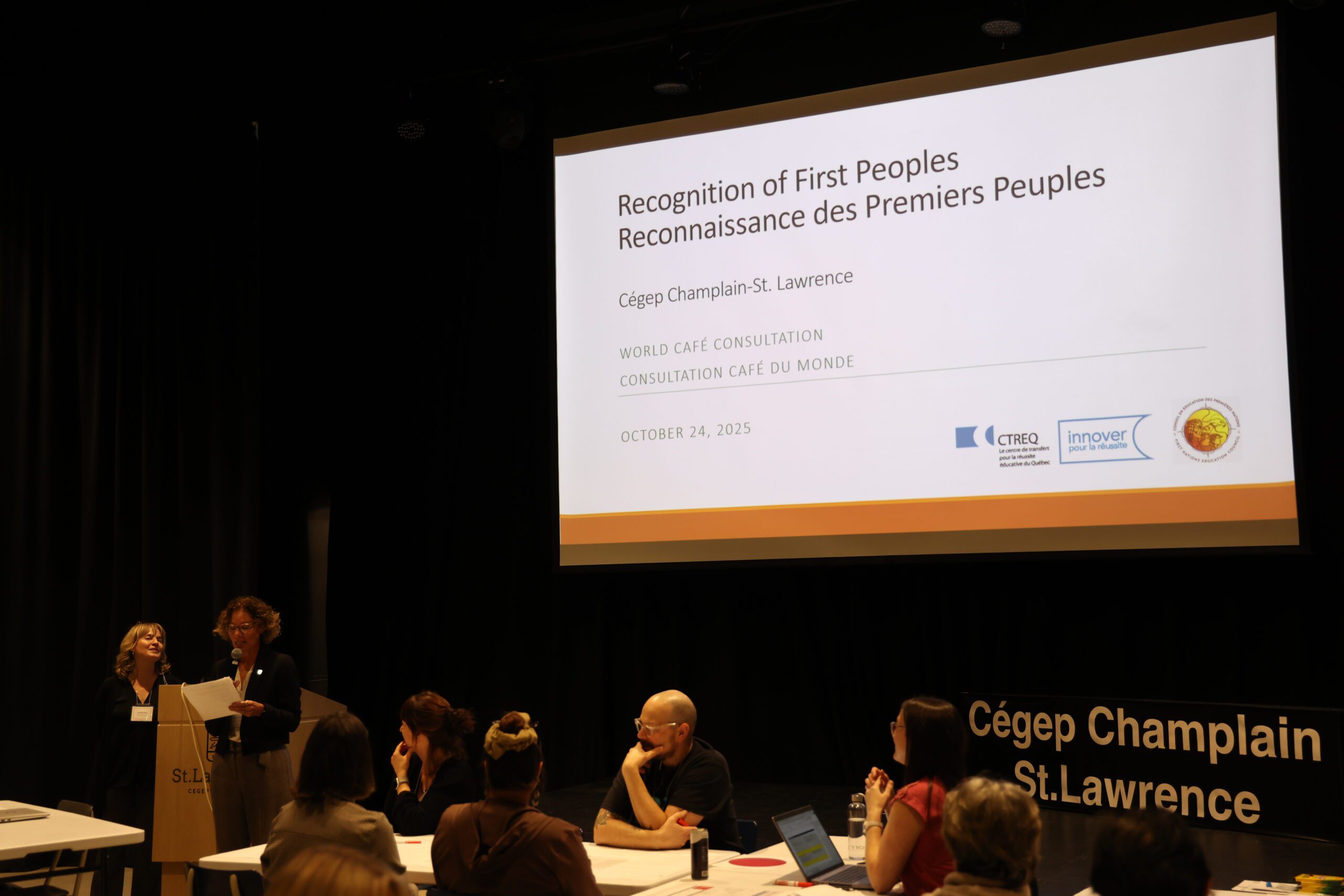
At St. Lawrence, the session opened with a brief presentation summarizing the research that inspired the initiative, including a survey of current practices conducted during the Winter 2025 semester. The three-hour workshop was then guided by five key recommendations:
- Student Transition and Well-Being
- Awareness, Training, and Professional Development
- Community Engagement and Partnerships
- Visibility and Recognition
- Governance and Accountability
One of the most powerful messages to emerge from the event was the importance of supporting decolonized approaches in partnership with Indigenous communities themselves. As one Indigenous student emphasized, the responsibility for advancing reconciliation and recognition should not rest solely on Indigenous students. Rather, it is a shared responsibility—one that requires learning, empowerment, and engagement from non-Indigenous students, faculty, and staff as well.
In terms of governance and accountability, participants also highlighted the need for institutional leadership to promote awareness among staff about the value of embracing diversity within the college community, as well as the importance of including Indigenous voices meaningfully in decision-making processes.
As a member of the leadership team organizing the event, I had the privilege of serving as a note-taker at the Community Engagement table. While I could not hear every conversation taking place around the room, I was deeply inspired by the thoughtful, sincere, and forward-thinking contributions shared at my table. Witnessing the collective development of ideas and the genuine commitment of participants was truly rewarding.
Caroline Martel
This consultation marks one step among many yet to come, as St. Lawrence works to recognize First Peoples throughout all areas of college life, and to foster an inclusive, respectful, and engaged community.
If you were unable to attend the workshop but wish to share your input, please contact Jacinthe Ruel, Institutional Development Counsellor.